Detachment: Loving Without Holding Too Tight
For years, I’ve protected myself from the ache of parting by building emotional armor—detachment as defense.

This past year, my daughter and I have both been learning the art of detachment.
One by one, her brothers moved away, and the rhythm of her life shifted. The daily play, the biweekly hugs, the laughter echoing through our home—all began to fade into memory.
For me, it was another kind of letting go.
My youngest son left for college—far enough that a visit requires a plane ride.
My second son got married and moved three hours away.
My oldest settled into his own place, ready to build his life.
Change arrived quietly but left its mark. The house became stiller, the noise softer, the dinners smaller.
For years, I’ve protected myself from the ache of parting by building emotional armor—detachment as defense. I learned early that if I could disconnect first, I might escape the sting of being left behind.
But this time, something is different.
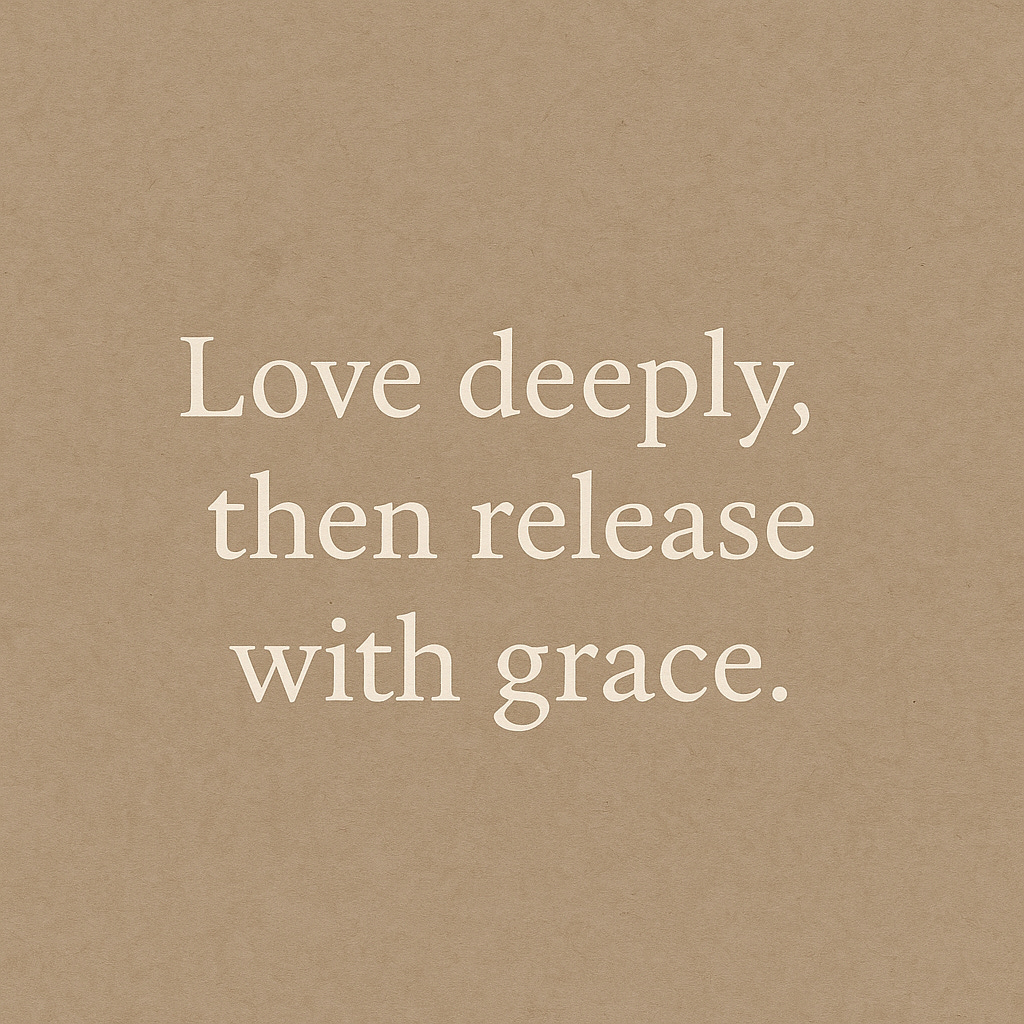
I think I’ve begun to teach my daughter a new version of detachment—one that’s rooted not in fear, but in love.
It’s not detachment for protection.
It’s detachment for release.
It’s loving someone so deeply that you can also be ready for them to leave when it’s time. It’s trusting that connection doesn’t require possession—that love can evolve, move, or even fade, and still remain pure.
Kaiya has been practicing this lesson in her own small, beautiful ways.
First, there was the hamster her brother bought her—the one who spent his days plotting escape. Eventually, he developed a tumor and died slowly, painfully. We said goodbye with tears and gratitude.
Then came the second hamster, the one who vanished during “The Great Hamscape.” He returned four days later, alive and unbothered, only to begin chewing through his cage again as if freedom was his destiny.
And this week, she came home from school holding a plastic bag with tiny air holes, cradling a cricket she named The Grinch.
She carried it carefully all day, through classes and aftercare, until I picked her up. As we drove to acro class, she looked at me and said,
“Don’t worry, Mama. I won’t get too attached. I know it has a short lifespan.”
Her voice was calm, matter-of-fact—wise in a way that caught me off guard.
She’s already learning the rhythm of loving and letting go.
Detachment, for her, isn’t avoidance. It’s acceptance.
It’s presence without possession.
It’s understanding that love and release can coexist.
She won’t hold on too tightly.
She won’t suffocate something just because she fears it might leave.
Instead, she’ll grow strong and gentle at once—able to love deeply and still release what she loves.
That, I’ve come to realize, is the most generous gift we can give anyone: the freedom to leave, knowing they were fully loved while they were here.
Detachment is not loss.
It’s liberation.

Reflection
Where in your life are you being asked to practice detachment—not to protect yourself, but to release with love?
What would it feel like to stop gripping what’s leaving and simply trust what’s meant for you will always return in another form?